Spyderserve Web Development
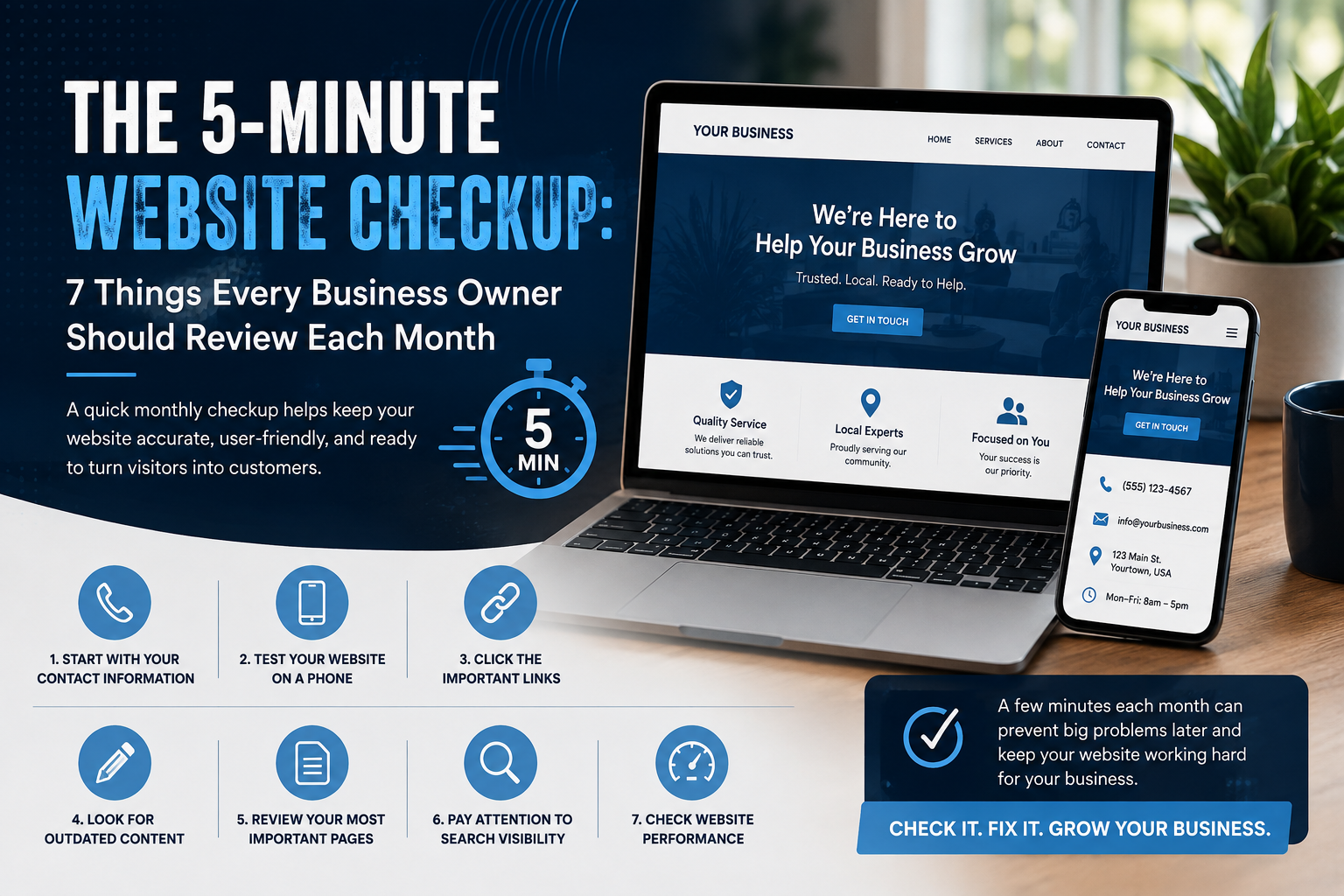
The 5-Minute Website Checkup: 7 Things Every Business Owner Should Review Each Month
Michael Royal - August 17, 2026
Business & Technology - Web Design & Development - Website Performance & Security
Your website may be working around the clock, but that does not mean it should be left on autopilot. Business information changes, links stop working, pages become outdated, and small technical problems can gradually create a poor experience for potential customers. The good news is that you do not need to be a web developer to catch many of these problems. A simple monthly website checkup can help keep your online presence accurate, useful, and ready to turn visitors into customers.
Start With Your Contact Information
One of the easiest things to overlook is also one of the most important. Take a few minutes to check the phone number, email address, physical location, hours of operation, and other contact information displayed throughout your website. Businesses change phone systems, move locations, adjust their hours, or update staff members, and an outdated contact detail can cause a potential customer to reach the wrong person or give up entirely.
Do not check only the Contact page. Contact information may also appear in the website header, footer, homepage, service pages, and other areas of the site. Keeping these details consistent helps customers know exactly how to reach you when they are ready to do business.
Test Your Website on a Phone
A website can look perfectly fine on a desktop computer while creating problems for someone visiting from a smartphone. Since many customers use mobile devices to research local businesses, checking your website on a phone should be part of your regular routine.
Open the homepage and several important pages on your phone. Make sure the text is easy to read, images display correctly, menus work, buttons are easy to tap, and contact information is immediately accessible. Pay particular attention to forms and calls to action. If a customer has difficulty navigating your site on a phone, there is a good chance you are losing opportunities before they ever contact your business.
Click the Important Links
A broken link can be easy for a business owner to miss and frustrating for a potential customer to encounter. During your monthly checkup, click the links that matter most, including service pages, contact forms, appointment requests, product pages, social media links, and important calls to action.
Pay attention to links that lead visitors to another website as well. Third-party pages can change or disappear without warning, leaving your website with a destination that no longer works. Regularly checking these connections helps ensure that visitors can move through your website without running into dead ends.
Look for Outdated Content
Your website should reflect the business that exists today, not the business you operated several years ago. Review your homepage, service descriptions, team information, photographs, announcements, and other frequently visited content for anything that is no longer accurate.
An outdated employee profile, old promotion, discontinued service, or event announcement can make a business appear neglected even when the company itself is operating successfully. Fresh content does not necessarily mean constantly rewriting your website. It means making sure the information customers see is current and represents your business accurately.
Review Your Most Important Pages
Not every page on your website has the same job. Your homepage may introduce your company, while individual service pages answer specific questions and encourage visitors to take the next step. Your Contact page gives customers a way to reach you. Other pages may be designed to generate leads, provide information, or establish credibility.
Once a month, review the pages that are most important to your business and ask a simple question: If I were a new customer, would this page give me enough information to take the next step?
If the answer is no, the page may need clearer information, stronger calls to action, better organization, or updated content. A website should not simply contain information; it should make it easy for visitors to understand what you do and what they should do next.
Pay Attention to Search Visibility
Search engine optimization is not something that should only be considered when a website is first launched. Search behavior changes, competitors publish new content, and businesses expand their services over time. Your website should continue to communicate clearly to search engines what your company does and where it operates.
Review whether your important pages accurately describe your services and include useful information that potential customers are actually searching for. Local businesses should also make sure important location information is accurate and consistent. Strategic content can help search engines better understand your website while giving customers useful answers to their questions.
Check Your Website's Security and Backups
Website maintenance is about more than appearance. Security and backups are important parts of keeping a business website dependable. A website that is not regularly maintained can become vulnerable to technical issues, outdated software, or other problems that can affect its performance and availability.
Business owners should know whether their website is being backed up and monitored regularly and who is responsible for handling technical problems when they occur. Having a plan before something goes wrong is much better than trying to determine what happened after a website becomes unavailable.
Turn a Quick Check Into a Monthly Habit
A website does not have to be completely redesigned every month to remain effective. In many cases, consistent attention to small details can make a significant difference. Checking contact information, testing mobile usability, reviewing links, updating content, examining important pages, monitoring search visibility, and confirming that security and backups are being handled can help keep your website in good shape.
For businesses that rely on their website to generate leads and communicate with customers, ongoing maintenance should be viewed as part of doing business online rather than an occasional project. A professional website is an investment, and maintaining that investment helps ensure it continues working for the company long after the initial launch.
Your Website Should Work as Hard as You Do
At Spyderserve, we believe your website should be more than an online brochure. It should be a dependable part of your business that helps customers find you, understand your services, and take the next step. From website development and hosting to SEO, maintenance, and ongoing support, Spyderserve can help keep your digital presence working for your business. Contact Spyderserve today to find out how a better-maintained website can support your goals.
This website uses cookies to improve your browsing experience. Cookies help us remember your preferences, keep you logged in, and understand how you interact with our site. We do not share any personal information collected by cookies with third parties.
Dismiss