Spyderserve Web Development
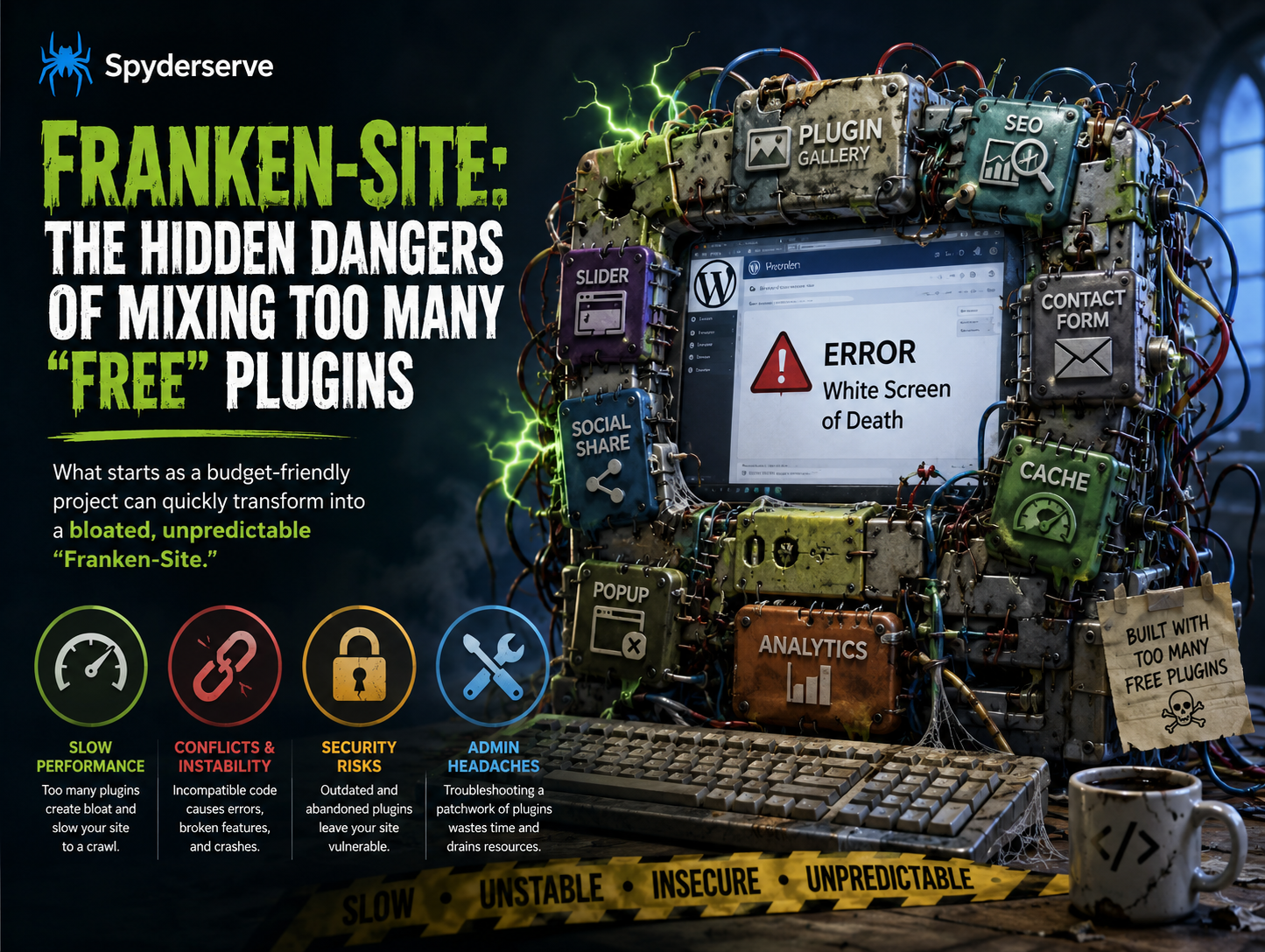
Franken-Site: The Hidden Dangers of Mixing Too Many “Free” Plugins
Michael Royal - June 18, 2026
Business & Technology - Web Design & Development - Website Performance & Security
When building or managing a business website, the allure of "free" is hard to resist. Platforms like WordPress offer a vast ecosystem of complimentary plugins designed to add immediate functionality. Need an elaborate contact form, a sleek photo gallery, or a quick search engine optimization boost? There is almost always a free extension available at the click of a button. However, stacking these tools without a cohesive strategy often leads to an unstable digital ecosystem. What starts as a budget-friendly project can quickly transform into a bloated, unpredictable "Franken-Site."
The Cost of Performance Slumps
The most immediate danger of relying on an excessive number of free plugins is the severe drain on website performance. Every plugin added to a site injects its own set of scripts, stylesheets, and database queries that must load every time a user visits a page. When independent tools from different developers pile up, they begin competing for server resources. This digital traffic jam causes page loading speeds to skyrocket, resulting in a frustrating user experience that drives potential clients directly into the arms of the competition.
Code Conflicts and Systemic Instability
Beyond performance slowdowns, a major concern is code incompatibility and systemic instability. Free plugins are rarely tested to see how they behave alongside other third-party extensions. When two different plugins attempt to utilize the same script or modify the same core function, they inevitably clash. These conflicts can cause seemingly unrelated features to break entirely, trigger layout distortions, or even result in the dreaded "White Screen of Death," rendering the entire website inaccessible to customers.
Security Vulnerabilities and Abandoned Code
Security vulnerabilities present an even greater threat to businesses operating a Franken-Site. While premium developers charge a fee to fund continuous maintenance, many free plugin creators abandon their projects over time. Outdated plugins that are no longer actively maintained become primary targets for hackers looking to exploit unpatched security flaws. Furthermore, some free tools are poorly coded from the start, inadvertently leaving open doors for malware injections, data breaches, and spam networks to compromise sensitive business data.
The Administrative Burden of Troubleshooting
Relying on a patchwork of free extensions also creates a massive administrative burden. When a website relies on a dozen different developers for its essential features, troubleshooting a single issue requires combing through an unpredictable maze of software. Because these tools lack dedicated, enterprise-grade support, businesses are often left to fix critical technical glitches entirely on their own.
Taming the Monster: A Better Approach
The most effective way to protect a business from these hidden dangers is to abandon the patchwork mentality in favor of a clean, purposeful build. A sustainable website relies on an intentional approach:
- Consolidate essential features by choosing high-quality, multi-purpose tools rather than downloading individual plugins for minor tasks.
- Prioritize professional custom web development that builds core functionalities directly into the site's architecture.
- Audit the plugin list regularly to deactivate and completely delete any extension that is not absolutely vital to daily operations.
Prioritizing Long-Term Web Stability
Building a dependable online presence requires looking past the short-term appeal of free extensions to focus on long-term stability. A streamlined website built on a secure infrastructure ensures a smoother customer experience, better search engine visibility, and significantly fewer technical headaches.
If your website is starting to feel like a sluggish, unpredictable patchwork of plugins, it is time to regain control of your digital storefront. Spyderserve Web Services specializes in a modular approach that replaces unstable, bloated tools with clean, custom web solutions tailored to your unique business goals. Contact the Spyderserve team today to audit your current platform and build a secure, high-performance website that truly supports your business growth.
This website uses cookies to improve your browsing experience. Cookies help us remember your preferences, keep you logged in, and understand how you interact with our site. We do not share any personal information collected by cookies with third parties.
Dismiss